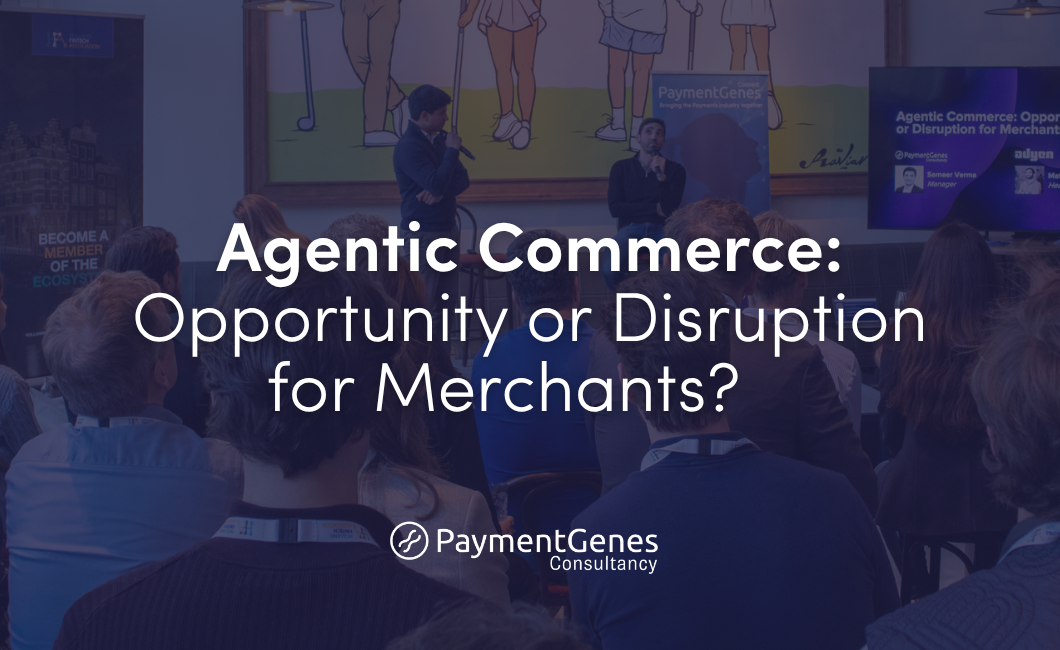
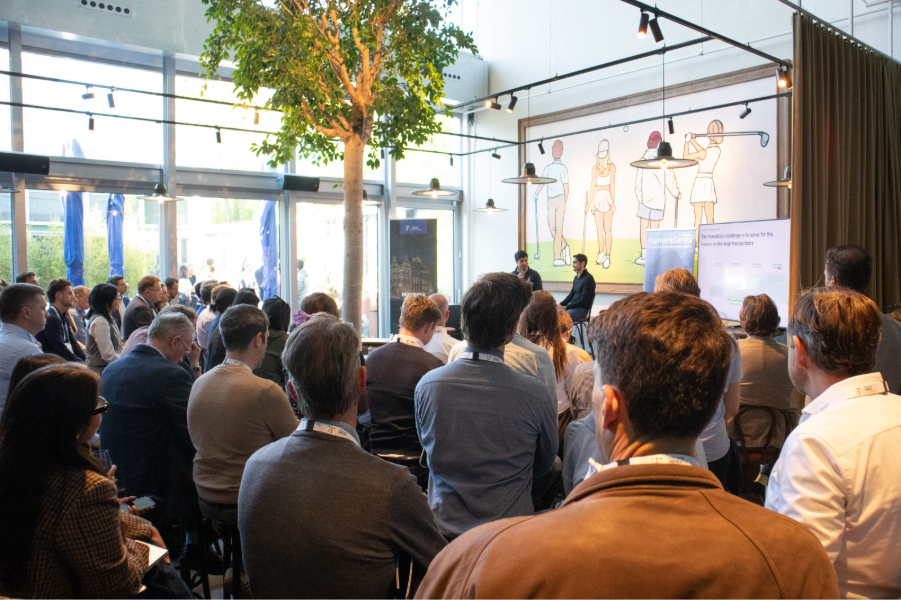
On 23 April, PaymentGenes Consultancy and Adyen co-hosted the Holland Fintech Association Monthly Meetup at Club Birdies in Amsterdam. Over 100 fintech professionals gathered for an evening of presentations, a fireside chat, and networking, all centred around one of the most consequential shifts currently underway in commerce: the rise of agentic AI.
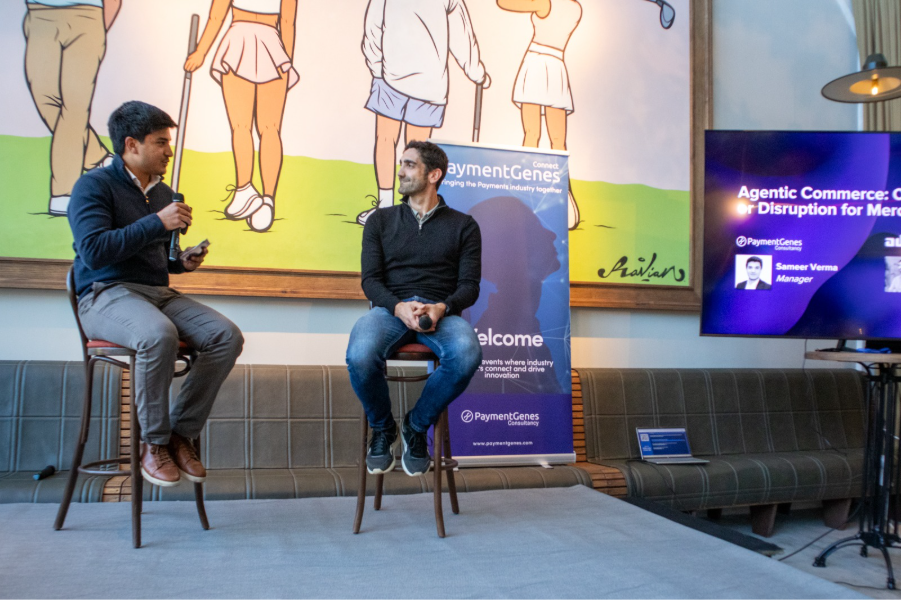
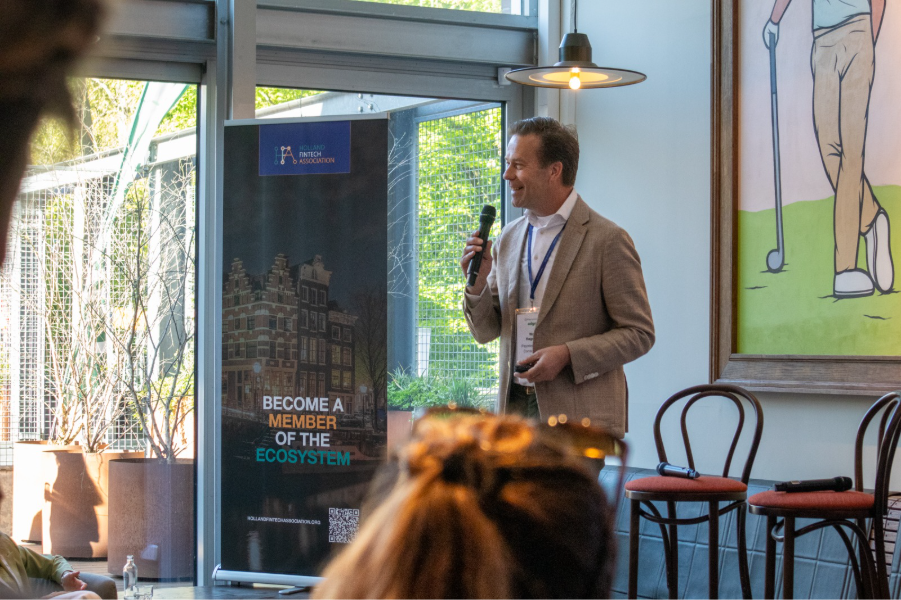
The evening brought together Sameer Verma, Manager at PaymentGenes Consultancy, and Mattia Zanella, Head of Tech Partnerships at Adyen, as speakers, joined by Annemieke Roobeek, President of the Holland Fintech Association, whose presence reflected the broader significance of the topic for the Dutch fintech ecosystem. A special thank you to Isabella Steyer Mader, our Partnership Manager, for her collaboration in making this event happen.
AI agents are beginning to search, compare, and complete transactions on behalf of consumers, without ever visiting a traditional storefront. For merchants, this introduces a fundamental question: is agentic commerce an opportunity to capture new demand, or a disruption that threatens their direct relationship with customers?
That question framed the entire evening.
Sameer Verma opened with a detailed overview of where the market stands today.
Agentic commerce is picking up pace across the fintech and broader commerce ecosystem, but actual attributable payment volumes remain limited. A range of merchants across verticals have implemented agentic solutions, although most are early-stage rollouts and limited to human-in-the-loop deployments. The use cases extend beyond consumer retail, with strong early traction in corporate travel, B2B procurement, and digital microservices.
The presentation drew on recent market research to ground the discussion in numbers:
Mattia Zanella, Head of Tech Partnerships at Adyen, joined Sameer for a fireside conversation exploring the practical implications for merchants, platforms, and payment providers.
Key themes from the discussion:
Merchant preparedness is uneven. While first movers are launching agentic solutions, the majority of merchants are still building the foundations: structured product catalogues, clean metadata, and API-ready infrastructure that agentic flows require.
The checkout is being transformed. The traditional e-commerce flow assumes a human browsing, selecting, and confirming at each step. Agentic commerce compresses this journey dramatically, raising concerns around customer ownership, loyalty and product ranking.
Trust and control are the central merchant challenge. As transactions are increasingly initiated by autonomous agents, merchants face real risks: price integrity, brand experience, loyalty disruption, and fraud systems that were built to block bots rather than serve them.
The protocol landscape is still being defined. Multiple competing frameworks are racing to establish standards for agent identity, payment authorisation, and fraud mitigation. Collaboration across the ecosystem will be essential.
The evening reinforced a clear conclusion: agentic commerce is not a question of if, but when and how fast. The merchants, platforms, and payment providers that build agent-ready infrastructure now will be best positioned as autonomy levels increase.
PaymentGenes Consultancy and Adyen will continue to support clients navigating this transition, from strategy and market entry through to implementation.


For questions on agentic commerce strategy.
.png)
For questions on agentic commerce strategy.

.png)
.png)