

Expanding a platform beyond its national borders and original purpose is a bold move. For Dutch mobility leader Shuttel, adding a credit card to its offering was a strategic leap: one that would unlock new verticals, enable international travel and spend, and future-proof its position in the rapidly evolving Mobility-as-a-Service (MaaS) landscape.
To navigate this transition, Shuttel partnered with PaymentGenes Consultancy to define the right technical and strategic path forward. Together, they tackled complex regulatory challenges, selected the right issuing partners, and laid the groundwork for a scalable, compliant, and innovative product launch. The result? A new Mobility + Payments offering was announced at Money2020 and is built for international growth.
This case study outlines how Shuttel executed this transformation and the steps that set the foundation for future expansion.
Shuttel, a joint venture of Pon and Volkswagen Financial Services, has been a leading provider of mobility services in the Netherlands for over a decade. The platform combines public transport, EV charging, fuel, shared mobility, parking and micromobility into a single app and card. Specialising in integrated mobility solutions for large enterprises, Shuttel supports over 125 corporate clients and 250,000 employees, including organisations such as the Dutch government, FrieslandCampina, KraftHeinz, Deloitte, Fugro, and Decathlon. With a focus on sustainability, efficiency, and ease of use, Shuttel aims to shape the future of mobility, making it smarter, greener, and more accessible for everyone.
With ambitions to expand its offering to include international travel and general business expenses, Shuttel faced a key limitation: its existing closed-loop network was too restrictive. They needed to adopt a scalable, open-loop payment model without sacrificing their strong mobility focus.
That’s where PaymentGenes came in.
Shuttel wanted to:
But this required navigating a complex environment:
Partner & Scheme Selection
We facilitated the selection of key technology partners through a structured vendor evaluation process based on detailed requirements setting. Based on this process, Shuttel was able to select Enfuce as the issuing processor and licensed entity and Visa as their scheme partner.
Target Operating Model
A new operating model was defined, integrating open-loop card issuing into Shuttel’s platform while maintaining the user experience across existing mobility services.
Regulatory Guidance
We supported Shuttel in understanding and meeting compliance requirements for issuing, including the regulatory framework from DNB, Visa onboarding, and scheme rules.
Implementation Roadmap
Together, we designed a roadmap to launch an MVP, prioritising scalability, risk management, and partner onboarding.
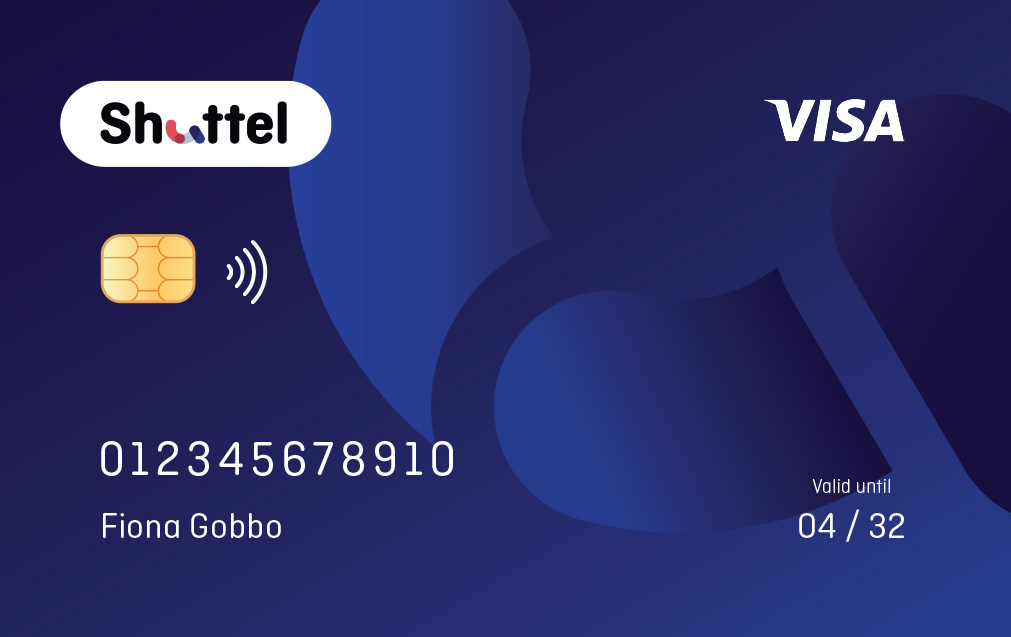
In June 2025, at Money2020, Enfuce and Shuttel announced the launch of their new credit card solution, one that unlocks mobility, travel, and spend control in one unified experience.
Expanded Proposition
Shuttel launched a credit card solution that complements its existing offering, covering both mobility and broader business spend, including international travel.
Strategic Growth Path
The integration of open-loop payments positions Shuttel to white-label their product and scale across Europe, strengthening their position in the MaaS and Travel-as-a-Service (TaaS) markets.
Operational Readiness
By combining compliance, partner coordination, and a clear go-to-market strategy, Shuttel accelerated time-to-market and laid a strong foundation for long-term success.
“Adding a commercial credit card to our platform has unlocked the next stage in our growth. PaymentGenes helped us navigate the complexity and set us up for scale.” — Joelle Stokkel, Manager Innovation at Shuttel


.png)