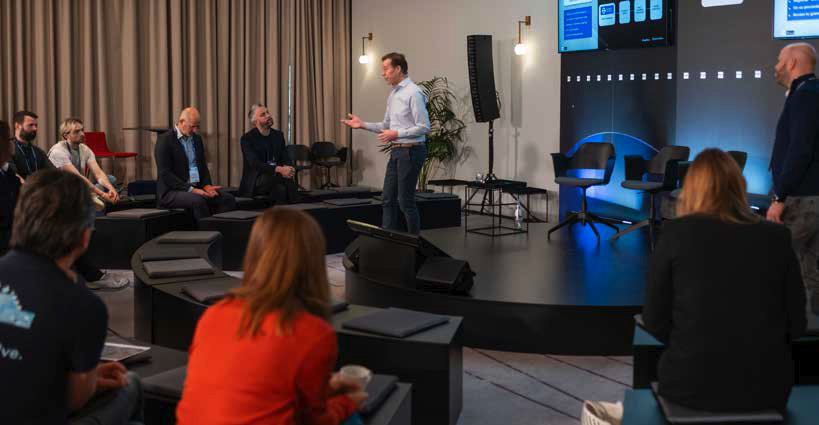
At the 2025 edition of MPE in Berlin, our team at PaymentGenes had the privilege of leading a workshop that sparked one of the most engaged conversations of the event. Together with Okke Mönking, VP of Business Development at Silverflow, our consultancy co-heads Ward Hagenaar and Bas van Donselaar explored how merchants are turning payments into a core strategic capability.
The article below—originally published in MPE Magazine Issue 110—summarises our views, real-life case studies, and practical guidance for merchants navigating this transformation. If you're a merchant, PSP, or fintech leader looking to unlock business value from your payments stack, this is for you.

By Ward Hagenaar & Bas van Donselaar, PaymentGenes | With Okke Mönking, Silverflow
Over the past decade, we’ve seen payments evolve from a “black box” cost center into a strategic capability. At the same time, we’ve seen a wave of merchants launching payment entities and orchestrating their own PSP infrastructure.
While this transformation may still be in its early stages for many, we believe that more merchants will follow—and that it will impact the roles of PSPs, schemes, acquirers, and processors alike.
So why is this shift happening now?
Merchants like Mercedes pay, Spotify, and Transport for London are no longer simply buying payment services off the shelf. Instead, they are:
This results in more control, better flexibility, and—crucially—improved margins.
Several factors are converging:
Merchants now see value in running payments as a product—one that requires tech, analytics, compliance, and operations—because the ROI justifies it.
Here are three real-world examples:
Mercedes builds its own connections and payment infrastructure to support multiple business lines and geographies. This provides consistency and a single point of control, critical when running complex, global businesses.
Spotify uses orchestration to route transactions intelligently, reduce friction, and balance cost vs. conversion across markets. Their internal payments team operates like a product squad—testing, iterating, and optimising every day.
TfL manages direct relationships with schemes and acquirers, owning the end-to-end payments value chain to reduce third-party dependency and increase cost efficiency. With millions of transactions per day, the business case was clear.

PSPs and acquirers must rethink their positioning.
We believe the future of payments is merchant-driven, modular, and intelligence-led.
Merchants will increasingly treat payments as a capability—not just a cost—investing in tech and talent to extract more business value.
This will unlock higher approval rates, lower fees, and faster expansion into new markets and channels.
But it also requires PSPs and partners to evolve. Those that embrace this shift and co-create with their merchant clients will remain indispensable.
This article was originally published in the MPE Magazine – Issue 110, pages 41–42.


.png)
.png)